Lotto Texas Number Selection: Why Six Distinct Values Matter
Understand Lotto Texas number selection, duplicate checks, sorted lines and the difference between a random example and an accepted entry.
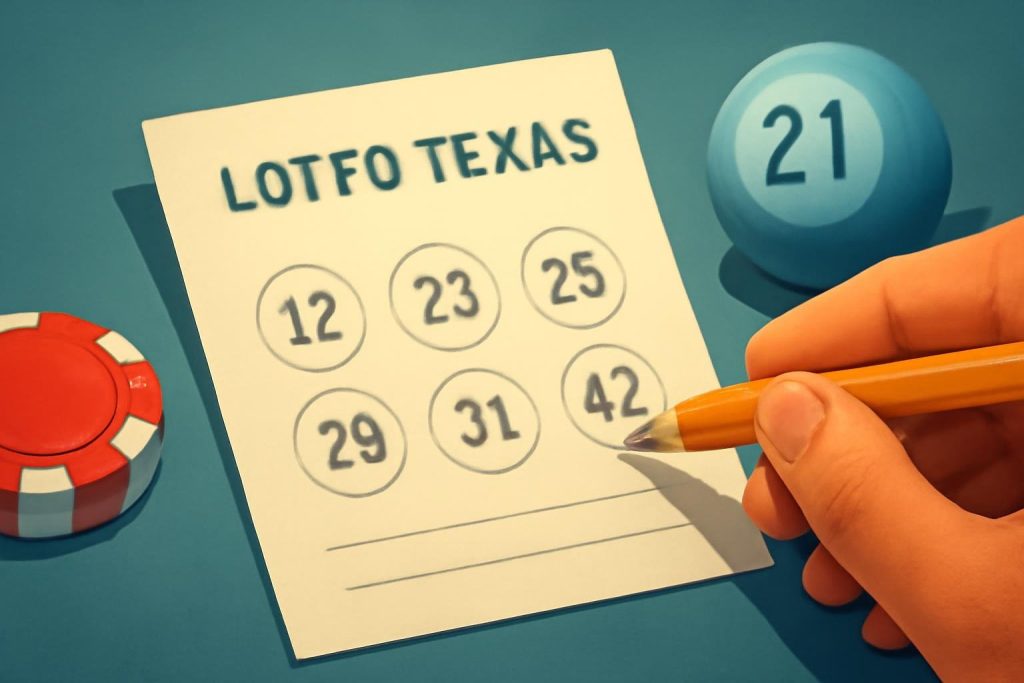
A six-number lottery line looks simple enough to write on a scrap of paper. The mistakes tend to appear when someone transfers it between a generator, a spreadsheet and a playslip. A repeated value can disappear during sorting, a game preset can belong to another state, or an extra number can be mistaken for a bonus field. For Lotto Texas, getting the structure right is more useful than decorating the selection with a story about luck.
The standard game uses six different numbers from a field of 54. A lotto texas number generator should therefore produce one complete six-number set within that range. That describes the format of a valid selection; it does not describe a forecast or a purchase.
Begin with the field, not the pattern
Check the game name before examining the output. Several lotteries ask for six numbers, but their upper limits differ. A line can be perfectly acceptable in one game and invalid in another. The generator should make the active range visible, particularly if it offers several lottery presets. Familiar-looking branding is less useful than an explicit explanation of the numbers being selected.
Within the main field, a number should occur only once. Rejecting a duplicate and drawing again is one way software can build a valid set. Sampling directly without replacement is another. Either approach needs to preserve the intended distribution across valid combinations. Simply deleting repeated values after generating six independent numbers can leave a short line.
Sorting changes presentation
Suppose a demonstration produces six valid values in an unfamiliar order. Arranging them from smallest to largest makes comparison easier, but the rearrangement does not create another Lotto Texas combination. The line is defined by its members rather than the order in which a tool displays them. Saving both versions as separate entries would overstate the amount of unique coverage.
This matters when checking several generated lines together. An application that stores selections as text might treat different orders as different strings. A useful duplicate check first puts each set into a consistent order, then compares the complete sets. It should distinguish repeated values inside a line from a repeated line elsewhere in the collection.
Randomness can look untidy
A generated set can contain consecutive values, several odd numbers or a cluster near one end of the range. Those appearances do not by themselves indicate a defect. Under a fair draw, every particular valid six-number set has the same jackpot probability. A visually balanced selection is one specific set, just as an awkward-looking selection is.
There is a separate question about groups of outcomes. Many different combinations contain a mixture of odd and even numbers, while very few form six consecutive values. A broad group can therefore be more common than another group even though every individual member remains equally likely. Confusing the group with a particular line is the source of many misleading selection rules.
Keep optional features separate
Lotto Texas Extra concerns additional non-jackpot prize opportunities under the operator's rules. It should not be represented as a seventh player-selected number added to the ordinary six-number line. When a tool discusses optional features, look for an explanation of what changes in the entry and what changes in the prize table.
The official entry screen or printed ticket remains the place to confirm the selected game, draw and any optional feature. A generator cannot establish that a payment was accepted or that a line was submitted before a sales cutoff. Copying a selection into a note is useful for record keeping, but it is not evidence that the lottery has registered an entry.
Review a line once, then preserve it
A practical review starts with the number count, the range and the absence of duplicates. Next, check the complete line after transfer. Leading zeros and spacing may change between displays without changing the values, while a missing or replaced digit does change the selection. Compare every value rather than relying on the general shape of the line.
If you save examples, label them clearly as examples and identify the game format used. Historical draw lists can help explain what results look like, but they cannot turn an otherwise valid selection into a reliable prediction. Keeping the task limited to correct formatting makes a generator easier to assess.
The useful outcome is a clear, reproducible record of six distinct Lotto Texas numbers. Software can remove tedious selection work and catch simple errors. It cannot make a chosen set more likely to match a fair future draw, and generating another set does not make an earlier valid set mathematically inferior.