RTP vs. Volatility in Online Slots: What the Numbers Can—and Can’t—Tell You
Learn how slot RTP and volatility differ, what these figures can tell you about a game, and why neither predicts your results in a session.
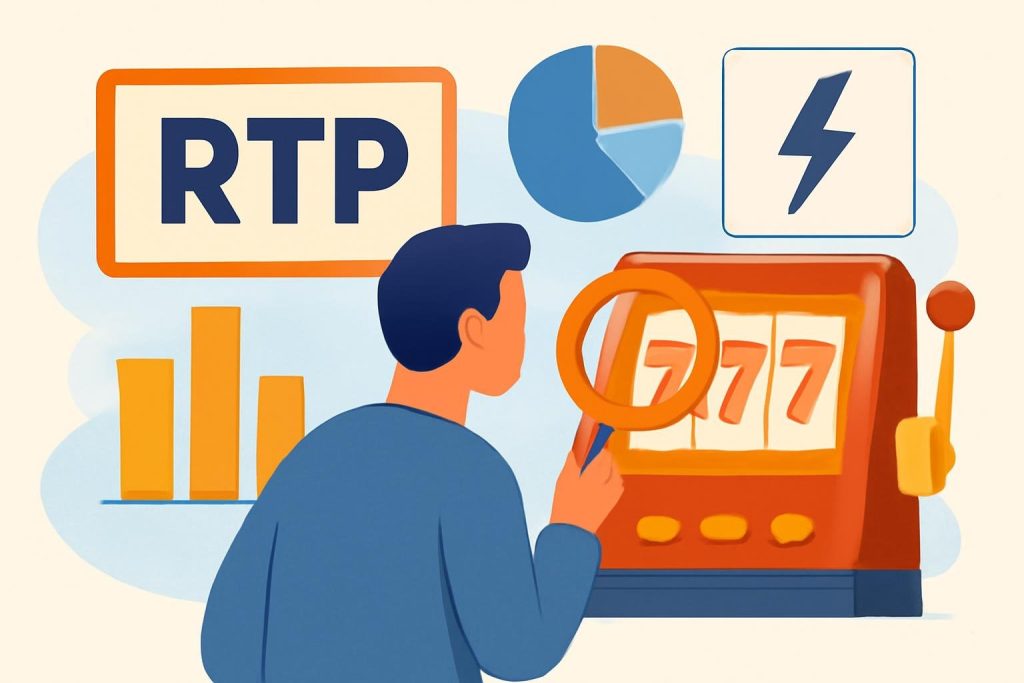
Online slot games often display information such as return to player (RTP) or describe their play style as low, medium, or high volatility. These terms can help explain a game’s design, but they are easy to misread. Neither is a forecast of what will happen in your next session, and neither makes a slot a reliable way to earn money.
Understanding the difference can help you choose a game based on the experience you want, set realistic expectations, and avoid treating a few spins as proof that a game is “due” to pay.
What RTP describes
RTP is a theoretical percentage representing how much of the total amount wagered a game is designed to return to players over a very large number of plays, according to its mathematical model. It is not a promise that a particular player will receive that percentage during a visit, or even over a specific number of spins.
For example, an RTP figure should not be read as a personal refund rate. Short-term results can be far above or below a theoretical figure because each result is uncertain. The displayed percentage is also only useful when you know which game version it applies to; some games may have different configurations. Check the game’s information panel and the operator’s rules rather than assuming every version is identical.
What volatility means
Volatility, sometimes called variance, is a broad description of how a game’s results may be distributed. It does not indicate whether a game is fair, nor does it tell you when a win will occur. Labels and measurement methods can differ between providers, so treat them as general guidance rather than precise promises.
- Lower volatility: Results may be distributed in a way that tends toward smaller or more frequent returns, though there is no guarantee of regular wins.
- Higher volatility: Results may be more uneven, with longer stretches of little return and the possibility of larger but less frequent outcomes. Those larger outcomes are not assured.
- Medium volatility: A general middle description, not a standardized forecast of session results.
Two games with similar RTP figures may still feel quite different because their outcomes can be distributed differently. Conversely, a volatility label does not override the uncertainty of each play.
Use the figures to choose an experience, not to predict a win
If you prefer a session that feels less swingy, a game described as lower volatility may seem more suitable—but it can still produce losses, and the label cannot ensure a particular pace of returns. If you are uncomfortable with long periods without a meaningful payout, a higher-volatility game may not match your preferences. In either case, choose only if the game is legal where you are and you meet the applicable age requirements.
A useful rule is to separate game selection from money expectations. RTP and volatility can help you understand how a game is described; they cannot tell you whether to increase a stake, keep playing after a loss, or expect a payout soon. Previous spins do not make a future result more likely simply because a win seems overdue.
A quick checklist before playing
- Open the game’s information or rules panel and confirm what the RTP figure refers to.
- Look for an explanation of volatility, while remembering that labels are broad and not guarantees.
- Decide in advance how much entertainment spending and time you are willing to use.
- Keep gambling money separate from essential expenses, and do not borrow or chase losses.
- Stop when you reach your limit, regardless of whether the session has been going well or badly.
For basic context on how slot play works, see our guide to playing slot machines. If you want a practical framework for setting a spending limit, our article on casino bankroll management covers budgeting principles.
The takeaway
RTP is a long-run theoretical measure, while volatility describes the general shape of possible results. Neither predicts what will happen to an individual player. Read the game information carefully, set firm limits, and treat slots as paid entertainment—not as a source of income. If gambling stops feeling manageable, take a break and seek support from a trusted person or an appropriate local support service.