How to Choose an Online Poker Table Before You Join
Use a practical checklist to compare online poker tables by format, stakes, size and pace—without mistaking a good fit for a prediction of results.
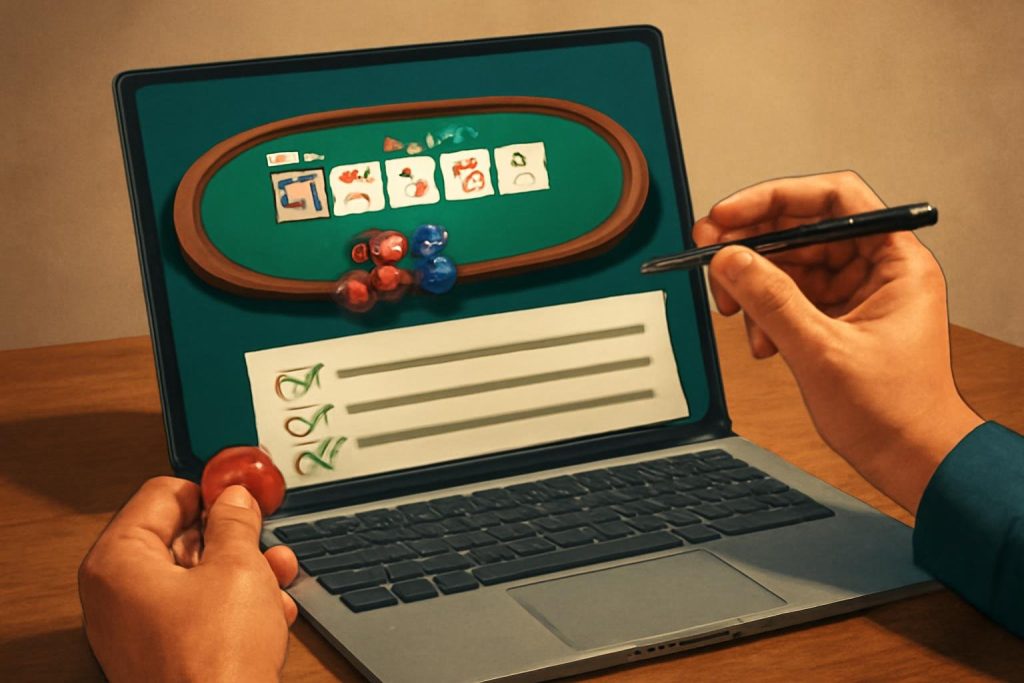
Choosing an online poker table is about more than finding a game with open seats. The format, stakes, table size, pace and rules all affect what the session feels like—and whether it fits your plans. A quick review before you sit down can help you avoid joining a game that is too fast, unfamiliar or costly for your comfort.
This is not a way to predict who will win. Short-term results are uncertain, and a table that looks appealing may change as players leave or join. Treat table selection as a practical check on fit, not a promise of better outcomes.
Start with the format and rules
First, confirm what kind of poker is being played. Cash games and tournaments work differently: in a cash game, chips represent a stake at the table; in a tournament, players generally pay an entry amount and play under the event’s structure. Variants also differ in hand rankings, betting rounds and available actions.
If you are unsure about a format, take a moment to review its rules before entering. Our guide to the basic rules of poker can help orient newer players. Then check the table’s own details, since limits and rules can vary by game.
- Game variant: Make sure you recognize the format and its rules.
- Betting structure: Check whether the game uses fixed limits, pot limits or no-limit betting.
- Entry and exit conditions: Review any minimum or maximum buy-in and how leaving the table works.
- Fees or event costs: Read the displayed terms rather than assuming all of an entry payment goes into the prize pool.
Match the stakes to a preset budget
Look at the table’s blinds or other stated limits before joining. The smallest displayed amount is not the only cost to consider: several rounds of play can add up, and a single hand may involve larger bets depending on the structure. Decide beforehand what amount you are prepared to lose as entertainment, and do not use money needed for essentials.
It can help to choose a session limit before opening the game. For example, set a maximum amount and a time to stop, then leave when either limit is reached. Avoid raising your budget to recover losses. For a broader discussion of planning play money, see this guide to casino bankroll management; its central budgeting idea applies across games, though poker formats have their own details.
Check the table size and pace
A full table, a short-handed game and a heads-up table can feel very different. With fewer players, hands may come around more often, while a larger table can mean longer waits between decisions. Neither setup is automatically easier. Pick a size that gives you enough time to follow the action and make decisions without feeling rushed.
Also consider the pace of play. A fast table may be a poor fit if you are learning the interface or prefer to think through each turn. If the game offers a practice mode or clearly marked free-play option, it may provide a way to understand the controls without risking money; check the terms to confirm what that mode involves.
Use observations carefully
Some lobbies display information such as the number of seated players or recent activity. These details can help you understand whether a table is active, but they do not establish that it is profitable or that its players follow a particular strategy. A few hands are not enough to reliably judge someone’s skill or habits.
Instead, focus on what you can verify: the rules, stakes, seat availability and whether you feel comfortable following the action. If the interface provides hand histories or table statistics, understand what each measure means before relying on it. Avoid treating labels or brief impressions as guarantees.
A quick pre-join checklist
- Do I know the game variant and betting rules?
- Are the stakes within the limit I set before playing?
- Do the buy-in and any fees make sense to me?
- Can I comfortably keep up with this table’s size and pace?
- Am I joining for entertainment, with a clear stopping point?
If any answer is no, choose another table or take a break. For a more enjoyable session, keep the focus on decisions and learning rather than trying to force a result; these ideas for keeping poker fun offer another useful perspective. Play only where it is legal for you, and step away if gambling stops feeling recreational.